
Found space, finished right.
A full-service builder for the Denver metro area. We take your attic from the first walkthrough to the final one: framing, insulation, systems, and finishes, with the owner managing every step.
The space is already there — we make it livable.
Finishing an attic is more than drywall under a roof. When framing, insulation, egress, systems and finishes are split across contractors who don’t talk, the gaps become your problem: rooms that bake in summer, headroom that doesn’t work, and no one who owns the result. We handle it as one project, built to code and comfortable year-round, with one person, the owner, answerable for all of it.
Attics around the Denver metro come with their own puzzles — low headroom, knee walls, roof structure, getting heating and cooling up there, and meeting egress requirements for a legal bedroom. We don’t gloss over those. We tell you up front what the space can and can’t become, build it properly, and give you the cost and options before any work moves forward. You approve every change.
A layout that makes the most of the headroom, slopes and knee walls.
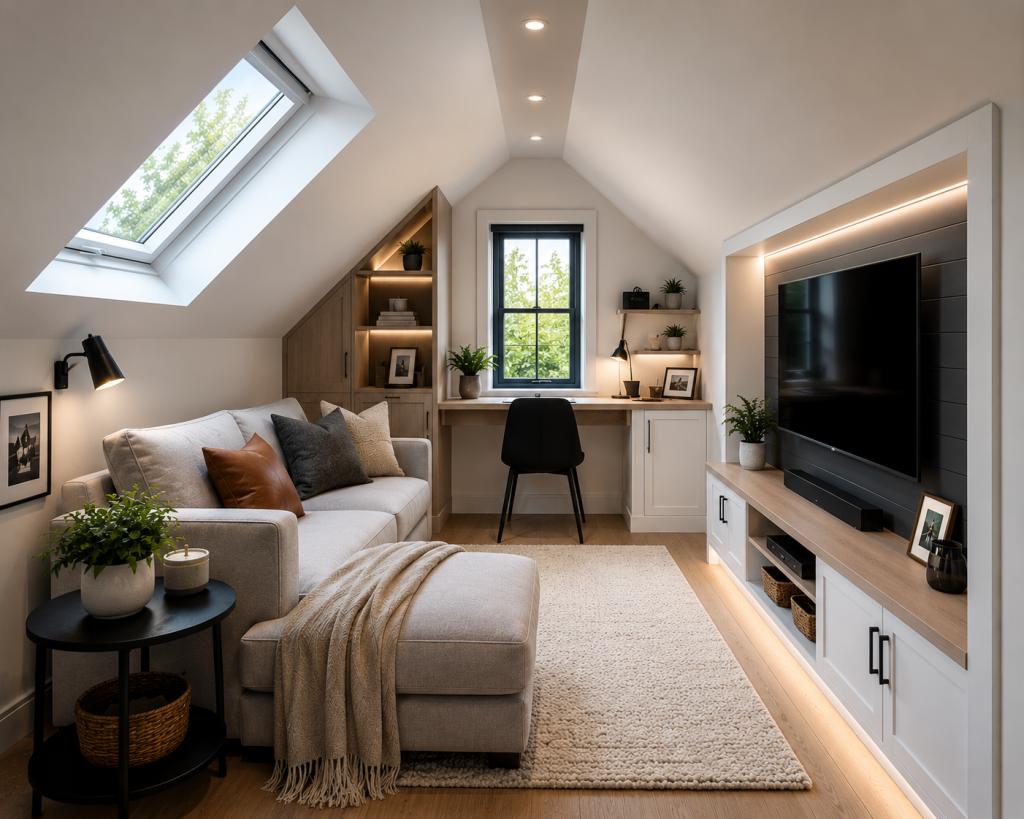
Framing, insulation, systems, lighting and finishes — coordinated under one roof.
From storage space to a
real room you’ll use.
Most people have heard a remodeling horror story. Our job is to make sure you don’t have one.
Framing & Headroom
Making the structure work as living space.
- Floor reinforcement
- Knee walls
- Dormers
- Headroom solutions
Insulation
The difference between usable and unbearable.
- Roof & wall insulation
- Air sealing
- Ventilation
- Soundproofing
Egress & Safety
What makes a legal, safe bedroom.
- Egress windows
- Stairs & access
- Smoke & CO
- Code compliance
Systems
Getting power, heat and cooling up top.
- Electrical & outlets
- HVAC extension
- Mini-splits
- Plumbing for baths
Lights & Storage
Turning awkward angles into an asset.
- Recessed lighting
- Skylights
- Built-in storage
- Knee-wall cabinets
Finishes
The details that make it feel like home.
- Drywall & trim
- Flooring
- Paint
- Doors & hardware
Your attic, run in clear steps.
However tricky the space, the promise is the same: no surprises you didn’t approve.
Walkthrough & honest conversation
Design direction & selections
Detailed, itemized proposal
Permits, schedule & expectations set
Build, with the owner on it
When the walls come open
Final walkthrough
Attics finished
across the
metro.
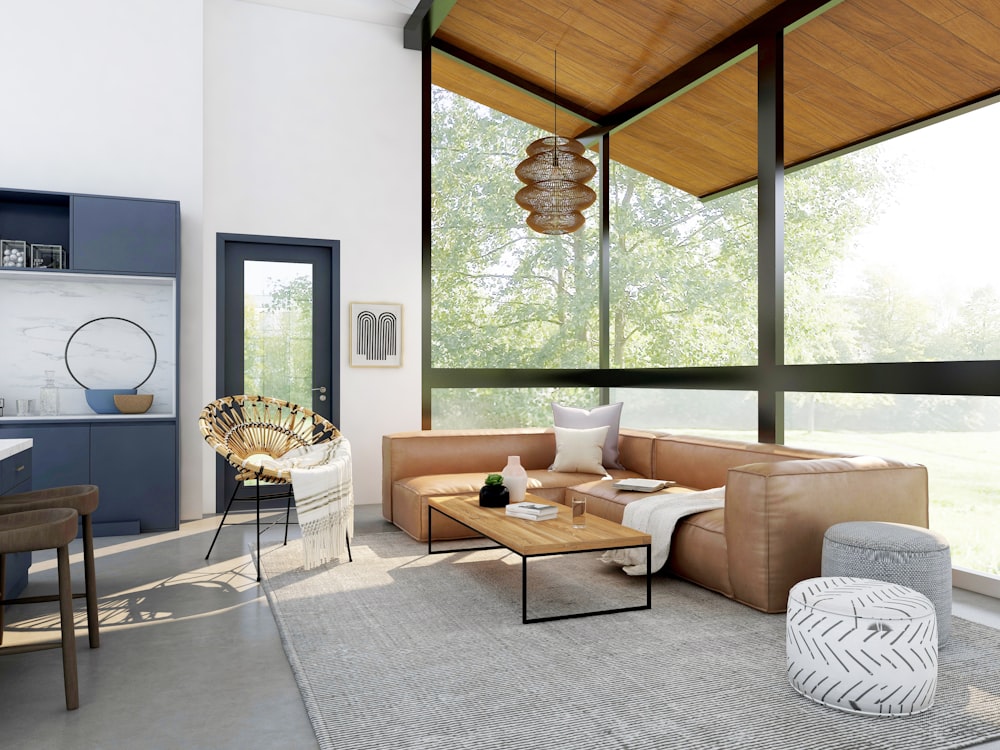
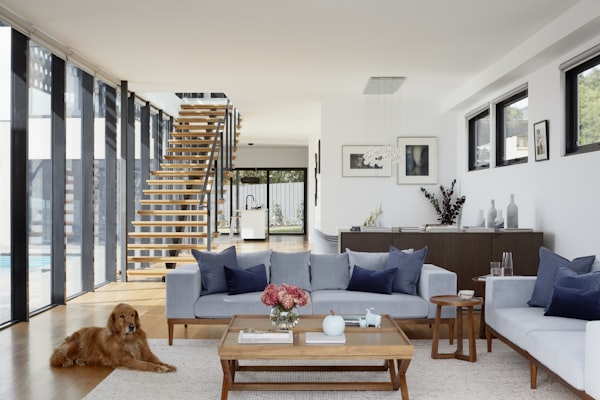
“The space is already there — our job is to make it worth living in.”
An unfinished attic is some of the cheapest square footage in a Denver home — no new foundation, no footprint expansion, no lot-coverage or setback fight — which makes it an appealing way to add a bedroom, office, or guest suite, especially on the small lots common in Denver’s older neighborhoods. Along with a finished basement, it’s one of the best ways to gain living space without building outward. The catch: an attic isn’t a room, and it can’t simply be drywalled into one. Whether it can become livable space at all comes down to ceiling height, floor structure, and roof framing — and those are the first things we check, before anyone talks finishes. At Dreamline Builders Co. we run attic conversions as a design-build: we confirm what’s feasible, engineer the structural work, and finish the space under one accountable team.
Whether you’re after an extra bedroom, a quiet office, or a full suite with a bath, this page covers what we build, what decides whether your attic can be finished, what it costs in Denver in 2026, and why homeowners here trust us with it.
What we build in the attic
A finished attic can be almost any room you’re short on — the constraints are headroom and access, not imagination.
Bedrooms, offices, and bonus rooms
The most common conversions are a bedroom (often a primary or guest suite), a home office, a playroom, or a flexible bonus room. Adding a bathroom is possible where plumbing can be reasonably routed up, though it adds cost and complexity. Any sleeping room has to meet egress requirements — more on that below.
Dormers, skylights, and daylight
Attics are often short on both headroom and light, and dormers solve both — a dormer adds standing room and wall space while creating room for windows, and it’s frequently what makes a marginal attic genuinely livable. Where headroom is already adequate and you mainly need light, skylights are the simpler route; at Denver’s altitude we spec UV-protected laminated glass to help limit UV fading of your floors and furnishings.
Insulation, HVAC, and comfort
An unfinished attic is the hottest and coldest space in the house, so comfort here is engineering, not an afterthought. We build in proper insulation and R-values, vapor management, and roof ventilation, and we typically condition the space with a single-zone ductless mini-split — which handles Denver’s wide temperature swings without the difficulty of extending the main system’s ductwork through a finished attic.
Can your attic actually become a room? The feasibility checks that come first
Most attic disappointments come from skipping this step. Before design, we confirm the three things that decide whether — and how — your attic can be finished. Attics keep their secrets until the drywall comes off, so if something unexpected shows up mid-project, we flag it early, walk you through your options, and keep things moving.
Ceiling height and the 7-and-7 rule
Habitable space needs adequate ceiling height. The common benchmark is the “7-and-7 rule”: at least half the finished area should have a ceiling height of about 7 feet, over a space at least 7 feet wide. If your attic doesn’t clear that as-is, it doesn’t mean the project is dead — it usually means a dormer or a roof modification to gain the headroom, which we price honestly rather than design around.
Floor joists and structural load
This is the one that surprises people. Attic floors are usually framed as ceiling joists — sized to hold up the ceiling below and light storage, not the 40-pounds-per-square-foot live load that habitable space requires. In older Denver homes those are often 2×6 or 2×8 joists that need reinforcing (typically sistering new lumber alongside the existing) before the floor is safe to live on. We have a structural engineer evaluate the framing, and your plans are stamped by a Colorado-licensed engineer.
Roof structure and access
How your roof is framed matters. Stick-framed rafters usually leave open, finishable space; a truss roof is a web of members that can’t simply be cut without engineered modification, which changes the scope significantly. Any conversion also needs real access — a permanent staircase, not a pull-down ladder — and that stair has to land somewhere on the floor below, so it affects the room beneath as well as the attic. And whatever we build still has to carry Denver’s roof snow load.
Our attic finishing process — from feasibility to final walkthrough
We run a design-build process, which means one team owns the project from first site visit to final walkthrough — an honest feasibility read, a fixed-scope proposal, and a single point of accountability throughout.
Consultation and feasibility
We start at your home, measure headroom, evaluate the floor and roof framing, and check access — then tell you straight whether the attic works as-is, needs a dormer, or isn’t a good candidate, with a real budget range before design begins.
Design, engineering, and permitting
We design the space, engineer the joist reinforcement and any roof or dormer work, and pull the building and trade permits Denver requires — structural, electrical, and mechanical work all trigger them.
Build and project management
Structural reinforcement, framing and any dormers, electrical and the mini-split, insulation, drywall, flooring, finish — plus the staircase — sequenced and managed so the work stays on schedule and contained. You get a schedule and a project lead who answers the phone.
Final walkthrough and warranty
We don’t call a project done until you do. Every conversion ends with a walkthrough against the original scope and a written warranty on our workmanship.
Recent Denver-metro attic projects
Every project shown here is a real Denver-metro attic we converted, with the neighborhood, scope, and budget range noted so you can gauge work comparable to your own home. Browse the before-and-after galleries, then open any project to see how we handled the headroom, the structure, and the access.
What attic finishing costs in the Denver metro
Attic finishing spans a wide range, because a “finished attic” can mean a simple bonus room in a structurally ready space or a dormered suite that needed reframing. In the Denver metro, finished living conversions generally run about $50 to $150 per square foot, with these typical bands for 2026:
Project scope | Typical Denver-metro range (2026) |
Basic finish — good existing headroom and framing; insulation, drywall, flooring, electrical, mini-split | $35,000 – $60,000 |
Full living conversion — joist reinforcement, egress, permanent staircase, possible bath rough-in | $60,000 – $120,000 |
Dormer or structural expansion — added headroom and light, complex roof or truss work | $100,000 – $200,000+ |
Individual line items move the total: a permanent staircase commonly runs $8,000–$18,000, skylights a few thousand dollars each, and a dormer $25,000–$55,000 depending on size. Older Denver homes can add cost where the framing, wiring, or the ceiling below the new stair opening needs work, so we carry a realistic contingency. On the return side, permitted finished attic space adds livable square footage and typically recoups a solid share at resale — while also, worth noting, raising your assessed value and property taxes. For a full breakdown, see our Denver attic finishing cost guide. We price fixed-scope after feasibility, so the number reflects what your attic actually needs.
Why Denver homeowners choose Dreamline Builders
We’re builders, not salesmen. An attic conversion is a structural project wearing a cosmetic one’s clothes — the framing, the headroom, the roof, and the stair decide everything — and our cross-trade experience means we assess those honestly before you spend on design, instead of finishing a floor that shouldn’t have been walked on. Where an attic isn’t a good candidate as-is, we’ll tell you, and show you what a dormer or reframe would take. We’re bonded and insured, we pull permits in every jurisdiction we work in, and your structural work is engineered and stamped.
“I personally stand behind every project we take on.” — Izzy, Owner, Dreamline Builders Co.
Attic finishing service areas
We finish attics across the Denver metro and the wider Front Range corridor, and we pull permits in each jurisdiction we work in: Denver, Lakewood, Littleton, Golden, Centennial, Aurora, Parker, Lone Tree, Boulder, and Castle Rock.
Attic finishing FAQs
Can my attic be finished into a living space?
Sometimes yes, sometimes only with modifications. It depends on ceiling height, floor framing, and roof structure. We evaluate all three up front and tell you whether it works as-is, needs a dormer for headroom, or isn’t a good candidate.
How much ceiling height do I need?
The common benchmark is the 7-and-7 rule: at least half the finished area at about 7 feet of height, over a space at least 7 feet wide. If you’re short, a dormer or roof modification can create the headroom.
Does a finished attic bedroom need a window?
Yes. Any sleeping room needs an emergency egress opening — an egress window, or in some cases a skylight or dormer window — for safe escape. We build that in.
Will my attic floor hold a room?
Not always as-is. Attic floors are often framed for storage, not people and furniture, so the joists usually need reinforcing to carry habitable live load. A structural engineer evaluates this and your plans are stamped.
How much does it cost and how long does it take?
Most finished living conversions in Denver run about $35,000 to $120,000, more with dormers or structural work. Active construction is typically 8 to 14 weeks, plus a few weeks of permitting before it starts.
Start your attic conversion
Book a free feasibility consultation. Call (720) 912-7945 or email izzy@dreamlinebuildersco.com.
Attic questions,
answered straight.
Yes. We help you land a layout that works around the slopes and knee walls and get flooring, finishes and fixtures decided early — the single biggest thing that keeps the project on schedule.
Often, yes — but it needs proper egress (usually an egress window or accessible exit), the right ceiling height, and code-compliant access. We’ll tell you what yours needs to count as a legal bedroom, and build it in.
The owner — not a rotating project manager. The same person who quotes your job coordinates every trade and is your point of contact from the first walkthrough to the last.
Insulation, air sealing and the right heating and cooling — usually an HVAC extension or a mini-split. An attic done without those bakes in summer and freezes in winter, so it’s the part we never shortcut.
Yes — converting an attic to living space involves framing, egress, electrical and often HVAC, all of which require permits. We pull them and coordinate inspections. It’s ours to manage, not yours. We never recommend skipping permits.
A 1-year workmanship warranty on labor and installation. Manufacturer warranties on materials and systems — windows, skylights, HVAC, fixtures — pass directly to you at completion.
Your project begins here.
Send a note about your home, your timeline, and your budget. We’ll be in touch within one business day.
720-912-7945
izzy@dreamlinebuildersco.com
Denver metro, roughly a 15-mile radius (Arvada, Lakewood, Littleton, Highlands Ranch, Aurora & nearby)
No obligation — just a straight conversation.
Attic Finishing in Denver, CO
Dreamline Builders Co. finishes attics across Denver for homeowners who need an extra bedroom, a home office, or a quiet studio without adding to their home's footprint. Denver building code requires a minimum ceiling height of 7 feet over at least half the room for it to count as livable space, and any bedroom needs a compliant egress window for emergency exit, so we start every project with an on-site assessment to confirm your rafter height and roofline can support those requirements. If headroom falls short, we'll talk through options like a shed dormer before any work begins.
We handle the full scope: permitting with Denver's building department, insulation upgrades to meet energy code in our climate, and extending or adding HVAC so the room stays comfortable through Denver's cold winters and hot summers. Flooring, electrical, drywall, and finish work are all part of the build. If you're ready to turn unused attic space into a room your family actually uses, contact us for a free in-home consultation and quote.
Related attic guides: Cost to finish an attic in Denver | Is finishing an attic worth it?
Frequently Asked Questions
How much does it cost to finish an attic in the Denver metro area?
Most attic finishing projects in the Denver area run between $25,000 and $65,000 depending on square footage, whether you need to raise the roofline for ceiling height, and the complexity of electrical, HVAC, and egress work. Older Denver bungalows and Denver Square homes often need structural reinforcement or dormers to meet code, which adds cost. We provide a detailed line-item estimate after our initial site visit so you know exactly what drives your number.
Do I need a permit to finish my attic in Denver or the surrounding counties?
Yes, nearly every jurisdiction in the metro, including Denver, Aurora, Lakewood, and Jefferson County, requires a building permit for converting attic space into livable area, especially when adding egress windows, electrical circuits, or HVAC. Permits typically also require inspections for framing, insulation, and final occupancy under the Colorado-adopted International Residential Code. As a licensed and insured contractor, we pull all required permits and schedule inspections as part of our process, so you don't have to navigate the city or county offices yourself.
What does Colorado building code require for a finished attic to count as livable space?
To count as habitable square footage, the space generally needs a minimum ceiling height of 7 feet over at least 50 percent of the floor area, a code-compliant egress window or door for fire safety, and proper insulation meeting Denver's climate zone requirements. It also needs permanent heating, which usually means extending your existing HVAC system or adding a mini-split. We evaluate your existing roof framing and ceiling height early on so you know whether you'll need a shed dormer or roof raise to meet these requirements.
How long does an attic finishing project typically take?
A straightforward attic finish with adequate existing headroom usually takes 6 to 10 weeks from permit approval to final walkthrough. Projects requiring a dormer addition, structural framing changes, or new HVAC ductwork can run 10 to 16 weeks, partly due to Denver-area permit review times and inspection scheduling. We give you a realistic project timeline up front and update you weekly so there are no surprises.
Will I need HOA approval to finish my attic?
If your home is in an HOA-governed community, which covers a large share of Denver metro subdivisions and townhome developments, you'll likely need approval for any exterior changes like dormers, added windows, or roofline modifications. Interior-only attic conversions sometimes don't require HOA review, but we always recommend checking your covenants first. We can help prepare the drawings and documentation most HOA architectural review committees ask for.
What's actually included in your attic finishing service?
Our scope typically covers structural evaluation and reinforcement, insulation upgrades to meet Denver's energy code, electrical and lighting installation, HVAC extension or supplemental heating and cooling, drywall, flooring, and trim, plus any egress windows or dormer framing needed for code compliance. We handle design, permitting, and all trade coordination as your single point of contact, and everything is covered under our contractor's license and insurance. We walk through the finished space with you at the end to confirm it matches the agreed scope before final payment.