
Homeowners across the metro ask us the same question almost every week: which projects actually pay you back, and which ones just feel good while you’re living in the house? Home remodel ROI in Denver depends heavily on which rooms you touch, how the local market is pricing resale homes in 2026, and whether the work is scoped and permitted correctly from day one. This article walks through the remodels that consistently return the most value in neighborhoods from Golden to Highlands Ranch, where the numbers get murkier, and how to think about return on investment differently depending on whether you’re planning to sell in two years or stay for twenty.
What Home Remodels Give the Best ROI in Denver Right Now?
Minor kitchen remodels, garage door replacements, and bathroom updates consistently return 70-90% of their cost at resale in the Denver metro, while major structural work like second-story additions returns less upfront value but unlocks square footage that today’s buyers are actively paying a premium for. According to national cost-vs-value data that Denver brokers regularly reference, a midrange minor kitchen remodel priced around $27,000-$32,000 nationally tends to recoup somewhere in the 70-85% range locally, and that number has held up reasonably well even as material costs climbed through 2024 and 2025.
What’s shifted in the Denver market specifically is buyer expectation around move-in readiness. Homes in Arvada, Lakewood, and Wheat Ridge built between 1960 and 1985 make up a huge share of inventory, and buyers touring a 1972 ranch in Wheat Ridge now expect updated electrical panels, a remodeled primary bath, and at least a partially finished basement before they’ll pay list price. That expectation gap is exactly why whole-home renovation has become one of the stronger ROI plays in this specific market, even though it carries a higher sticker price than a single-room project. You can see current pricing breakdowns for that scope on our whole-home renovation cost guide for Denver.
Does a Bathroom Remodel Still Pay Off in 2026?
Yes – a midrange bathroom remodel in the Denver metro, typically priced between $18,000 and $35,000 depending on finishes, generally recovers 60-70% of cost at resale, and that percentage climbs when the remodel adds a second full bath to a home that only has one. Single-bathroom homes are a known liability in Denver’s resale market; a 3-bedroom, 1-bath home in Littleton or Centennial will often sit 10-15 days longer on market than a comparable 3-bed, 2-bath listing.
Converting a half-bath to a full bath, or splitting an oversized primary bedroom to carve out a second full bath, tends to outperform cosmetic-only updates in terms of dollars returned per dollar spent. Tile, vanity, and fixture choices matter less for ROI than the raw bathroom count and layout logic. For current material and labor cost ranges specific to this market, our bathroom remodel cost breakdown for Colorado walks through 2026 pricing by tier.
How Does Kitchen Remodel ROI Compare to Other Projects in Denver?
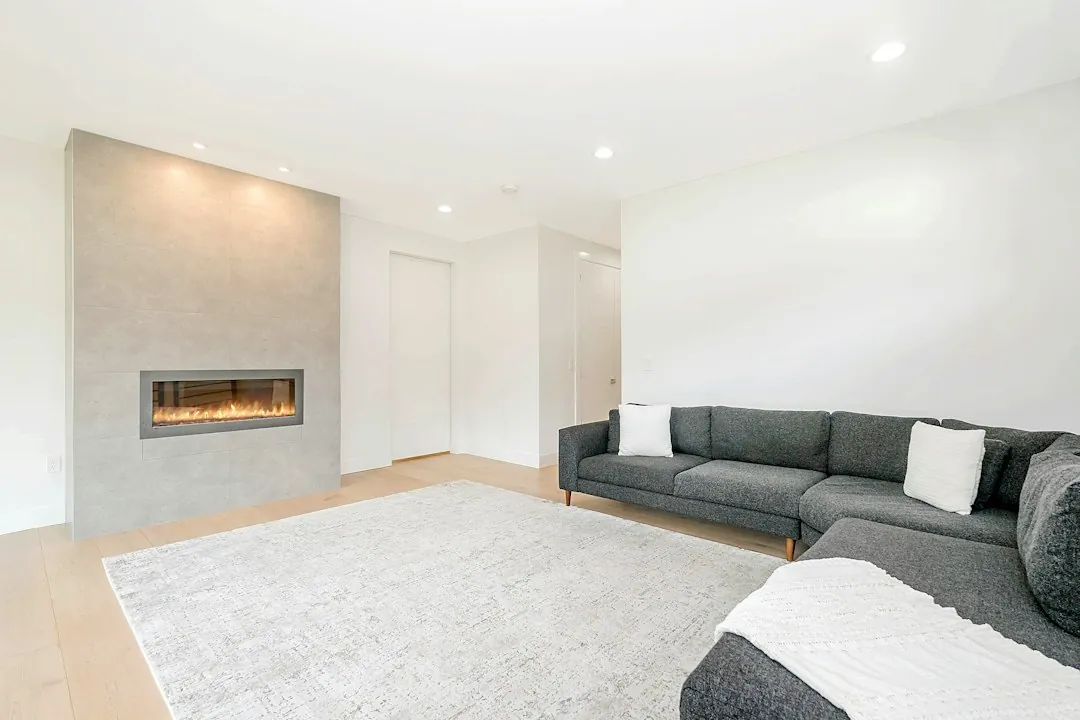
Kitchen remodels in Denver return roughly 70-85% of cost when kept to a minor-to-midrange scope, but full gut kitchen remodels above $75,000 often return a lower percentage because they push past what comparable homes in the neighborhood can support at resale. This is the single most common value mistake we see: a homeowner in Golden installs a $90,000 kitchen in a neighborhood where the median sale price tops out at $650,000, and the kitchen simply can’t be recovered dollar-for-dollar because no buyer in that price band is paying a premium large enough to offset it.
The fix isn’t to avoid kitchen work – it’s to scope the kitchen to match the house and the block. A reface-and-reconfigure project that keeps the existing footprint, replaces cabinet doors, swaps in quartz counters, and updates appliances typically lands between $35,000 and $55,000 in the metro and holds a stronger ROI percentage than a full structural gut that moves plumbing and knocks out load-bearing walls.
What Kitchen Finishes Actually Move the Needle on Appraisal?
Appraisers and buyers respond most strongly to updated countertops, new appliances, and layout changes that improve traffic flow – cosmetic swaps like paint or hardware rarely move an appraisal, but a reconfigured island or opened sightline to a living room regularly does. In a market where the median Denver-metro home was built before 1990, closed-off galley kitchens are one of the most common objections buyers raise on a walkthrough.
Three specific upgrades tend to generate outsized appraisal response relative to their cost:
- Removing a non-structural wall between kitchen and dining room to create an open sightline, often $4,000-$9,000 depending on electrical rerouting
- Upgrading from laminate to quartz or quartzite counters, typically $60-$120 per square foot installed
- Replacing a dated peninsula with a functional island that includes seating, which buyers consistently cite as a top-three want in Denver buyer surveys
None of these require a full kitchen teardown, which is part of why targeted kitchen work tends to outperform full guts on a pure ROI basis, even though the finished result looks less dramatic in before-and-after photos.
Is Finishing a Basement a Good ROI Move in the Denver Market?
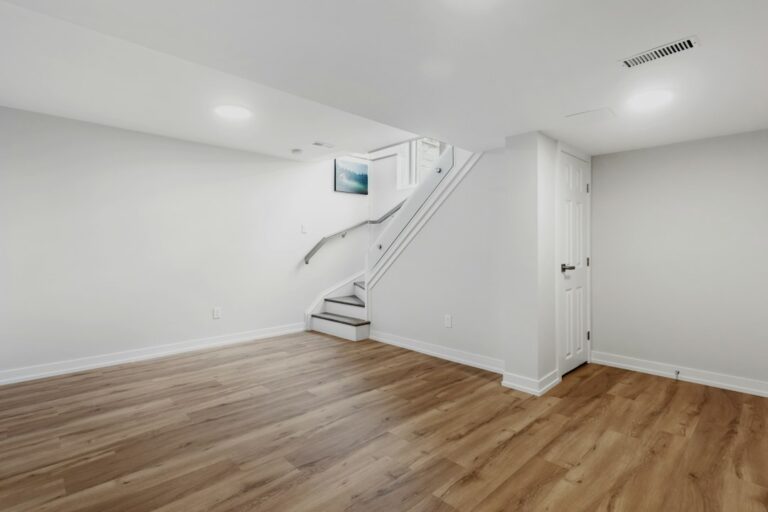
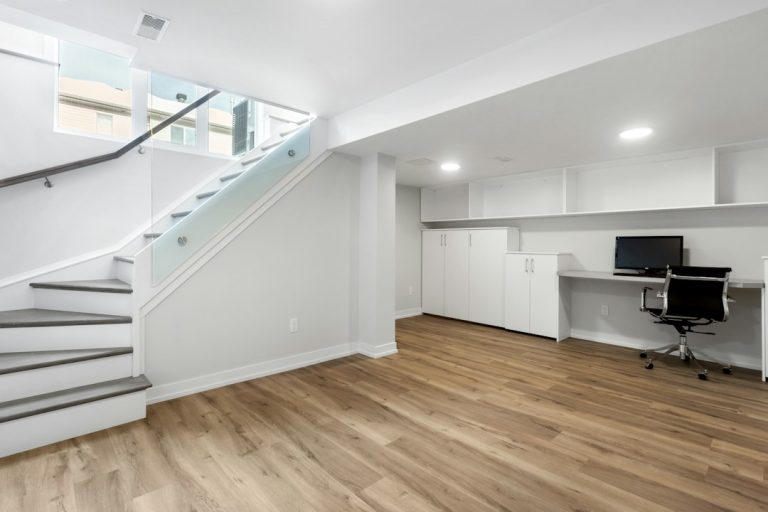
Basement finishing in Denver generally returns 70-75% of project cost, and that return climbs when the finished space includes a legal egress bedroom and bathroom, since those additions directly increase a home’s bedroom/bathroom count on paper. Roughly 85% of homes we work on in Centennial, Highlands Ranch, and Parker have unfinished or partially finished basements, which means this is one of the highest-volume ROI opportunities in the entire metro.
Jefferson County and Denver’s own building department both require a permitted egress window well for any basement bedroom, and skipping that step is the single most common way homeowners torch their own ROI – an unpermitted basement bedroom doesn’t count toward square footage on a county assessor record or an appraisal, no matter how nice it looks. Pulling the permit correctly from the start is standard practice on every basement project we scope, and it’s the difference between a basement that adds real appraised value and one that’s cosmetically nice but invisible to a buyer’s lender.
How Much Does a Finished Basement Add to Home Value in Denver?
A properly permitted basement finish with a legal bedroom and full bathroom typically adds 60-70% of its construction cost back in appraised value immediately, with the percentage improving further at resale if the added bedroom pushes the home into a different bedroom-count search bracket (e.g., from a 3-bed to a 4-bed listing). That bracket jump matters more than most homeowners realize, because online buyer searches filter by bedroom count first.
For detailed 2026 cost ranges by finish tier, see our basement finishing cost guide for Denver. Homes in older Arvada and Wheat Ridge neighborhoods with 8-foot basement ceiling heights tend to finish out more cost-effectively than newer builds in Parker or Castle Rock with lower 7-foot pours, since ceiling height restrictions can limit duct and soffit placement and sometimes require a partial dig-out to meet code clearance.
Does a Home Addition or ADU Outperform a Remodel for ROI?
Additions and ADUs generally return less of their raw cost percentage-wise than a kitchen or bath remodel, but they create an entirely new income or living-space asset that a simple remodel can’t – an ADU in Denver can generate $1,800-$2,600 a month in rent, which changes the ROI math from a resale calculation to a cash-flow calculation. This is the biggest strategic distinction in any Denver home remodel ROI conversation: resale-percentage ROI and income-producing ROI are not the same metric.
Denver’s ADU zoning rules, which expanded eligibility citywide in 2021 and have continued to see incremental updates since, allow detached accessory dwelling units on most single-family lots that meet minimum lot size and setback requirements. A detached ADU in the 500-650 square foot range typically costs $180,000-$260,000 to build in 2026, and while that won’t return 100% of cost in a straight resale comparison, a rented unit can offset $21,000-$31,000 in annual income, which often outpaces any remodel’s resale bump within three to four years.
When Does a Second-Story Addition Make More Sense Than a Remodel?
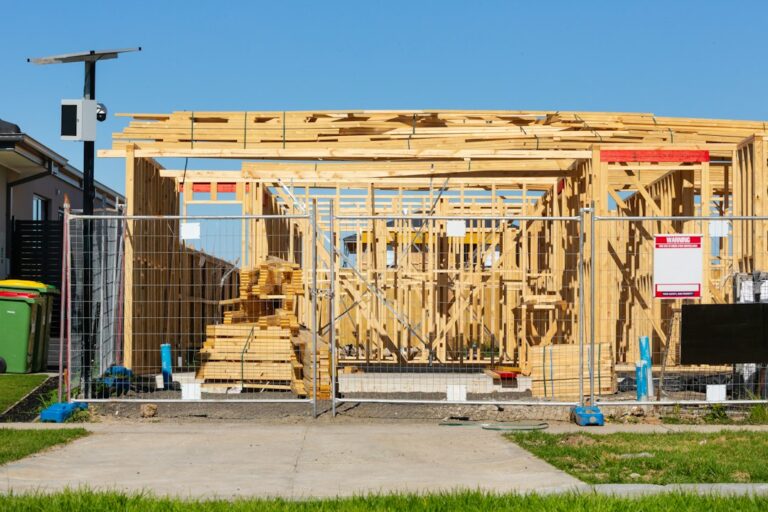
A second-story addition makes more sense than a remodel when the lot is too small or restrictively zoned to build out, which is common in older Denver neighborhoods like Wheat Ridge and parts of Lakewood where lot widths often sit under 50 feet. Adding a full second story to a 1,100 square foot ranch can push total living space past 2,000 square feet, which frequently moves the home into a different comparable-sales bracket entirely.
Second-story additions run higher per-square-foot than main-floor remodels because of structural reinforcement to the existing foundation and first-floor framing, plus temporary roof removal and re-framing. Costs in the Denver metro typically land between $150 and $300 per square foot in 2026 depending on roofline complexity and whether existing plumbing stacks can be reused for a new upstairs bathroom. Our second-story addition cost guide for Denver breaks down pricing by scope, and homeowners weighing this option against a full ground-level addition should also review our home addition cost guide for a side-by-side comparison.
How Do Denver’s Local Market Conditions Affect Remodel ROI?
Denver’s remodel ROI is shaped by three local factors: a housing stock that’s largely 35-65 years old, HOA and historic-district rules that restrict exterior changes in neighborhoods like Golden and parts of Littleton, and an altitude/climate profile that makes certain materials and systems (like HVAC sizing and insulation R-value) more valuable to upgrade than they would be at sea level. A remodel that ignores these local conditions can look great on paper nationally and still underperform locally.
Homes above 5,280 feet in elevation experience roughly 15% more intense UV exposure and wider daily temperature swings than lower-elevation markets, which is why buyers in Castle Rock, Parker, and the foothills communities near Morrison increasingly ask about insulation upgrades (R-49 or higher in attics) and high-efficiency HVAC during a remodel walkthrough. Including those upgrades during a whole-home renovation costs incrementally less than retrofitting them later, and appraisers are starting to note energy-efficiency upgrades more consistently on Denver-metro appraisal forms than they did five years ago.
Which Denver Neighborhoods See the Strongest Remodel-Driven Value Gains?
Neighborhoods with a wide gap between original build quality and current buyer expectations – including parts of Arvada, Wheat Ridge, Lakewood, and inner Aurora – tend to see the strongest remodel-driven value gains, because the “before” condition is dated enough that a quality remodel creates a dramatic before-and-after comparable jump. In contrast, newer neighborhoods in Highlands Ranch or Lone Tree built after 2000 already meet most buyer expectations out of the box, so remodel ROI percentages there tend to be more modest since there’s less of a gap to close.
A practical way to think about this: a $150,000 whole-home renovation on a dated 1968 Wheat Ridge ranch might push the home’s value up by $130,000-$145,000, because the before-condition was holding the price down significantly. That same budget spent on an already-updated 2008 Highlands Ranch home might only add $90,000-$100,000 in value, simply because the home didn’t need as dramatic a transformation to begin with.
| Project Type | Typical Denver-Metro Cost Range (2026) | Approximate ROI Recovered at Resale |
|---|---|---|
| Minor kitchen remodel (reface/reconfigure) | $35,000 – $55,000 | 70% – 85% |
| Full kitchen gut remodel | $75,000 – $120,000+ | 50% – 65% |
| Bathroom remodel (midrange) | $18,000 – $35,000 | 60% – 70% |
| Basement finish with egress bedroom | $45,000 – $85,000 | 70% – 75% |
| Whole-home renovation | $150,000 – $350,000+ | 65% – 80% (varies by starting condition) |
| Detached ADU | $180,000 – $260,000 | Lower resale % but $1,800-$2,600/mo rental income potential |
| Second-story addition | $150 – $300 per sq ft | 60% – 70%, higher when it shifts comparable-sales bracket |

My Experience Managing Home Remodel ROI Projects in Denver
I’ve walked through hundreds of pre-remodel consultations across Jefferson, Arapahoe, and Denver counties, and the pattern that surprises homeowners most isn’t about finishes – it’s about scope discipline. I’ve seen a $40,000 bathroom addition in a Littleton split-level add more resale value than a $95,000 kitchen remodel two streets over, purely because the bathroom addition solved a bedroom-to-bathroom ratio problem that every buyer touring the neighborhood was flagging.
One of the clearest lessons from managing whole-home renovation projects start to finish is that permit sequencing affects ROI almost as much as design choices do. When we pull permits ourselves and coordinate structural, electrical, and mechanical trades in the right order, a whole-home project in the 1,800-2,200 square foot range typically moves from permit issuance to final inspection in 14-20 weeks. Projects that get permitted piecemeal by homeowners managing subcontractors independently routinely stretch past 30 weeks, and every extra month of carrying costs, temporary housing, or delayed listing date eats directly into realized ROI, regardless of how nice the finishes turn out. That’s a big part of why Dreamline operates as a single bonded, insured design-build team pulling its own permits with fixed-scope pricing rather than handing homeowners off between separate trades – it protects the timeline, and the timeline protects the return.
What Mistakes Have I Seen Hurt ROI the Most?
The two mistakes I see most often are over-customizing finishes to personal taste in a way that narrows the buyer pool, and skipping permits on basement or structural work to save money upfront. Both decisions feel reasonable in the moment and both consistently cost homeowners more at resale than the money they thought they were saving.
A Parker homeowner once skipped a permit on a basement bedroom to save roughly $1,200 in permit fees; the county assessor’s record never reflected the added bedroom, and the appraiser for the eventual buyer’s loan couldn’t count it either, which cost an estimated $18,000-$22,000 in missed appraised value. Compare that to a Highlands Ranch client who kept finishes neutral (quartz in a standard white/gray palette instead of a bold color choice) specifically because their agent advised it would appeal to a broader buyer pool within 18 months – that remodel sold within 11 days of listing.
How Should a Denver Homeowner Decide Which Remodel to Prioritize First?
Start by identifying the single biggest gap between your home’s current condition and what comparable sold listings in your specific neighborhood include, since closing that gap – whether it’s a missing second bathroom, an unfinished basement, or a dated kitchen – typically returns more value than upgrading something your home already does well. This gap analysis is more reliable than any generic “best ROI” ranking, because ROI is always relative to what a specific house is missing.
A practical sequence we recommend for homeowners planning a project over a 2-5 year horizon:
- Pull recent comparable sales within a half-mile radius and note bedroom/bathroom count and finished square footage
- Identify whether your home is below, at, or above that comparable set on those metrics
- Prioritize the single largest gap (often basement finish or second bathroom) before cosmetic upgrades
- Budget 10-15% contingency for permit-driven surprises, especially on homes built before 1975
- Sequence structural and mechanical work before finishes to avoid redoing completed work
For homeowners who aren’t sure where their specific project should start in that sequence, our guide on where to start a whole-home remodel in Denver walks through a more detailed version of this planning process, and our whole-home remodeling services page outlines how we scope these multi-room projects under a single fixed-price contract.
Does Timing the Market Affect Remodel ROI in Denver?
Yes – remodels completed in late winter or early spring tend to list and sell faster in the Denver metro, since buyer activity picks up sharply in March and April, giving a freshly remodeled home less time sitting on market accruing carrying costs. A remodel finished in October that lists in November often sits through the slower winter months before activity picks back up, which can add 60-90 days of holding costs that erode the eventual return.
Homeowners in Lone Tree, Boulder, and Castle Rock working with us on a sale-focused timeline often target a January permit pull specifically so a 12-16 week renovation wraps in time for a March or April listing. That timing detail alone, independent of the remodel’s quality, measurably affects the final ROI number on paper.
FAQ
What single remodel gives the best ROI in Denver for a quick resale?
A minor kitchen refresh combined with a bathroom update typically gives the strongest short-term ROI for homeowners planning to sell within a year, since both projects address the most common buyer objections without the longer timeline and higher risk of a full structural remodel.
Is a whole-home renovation worth it if I’m planning to stay in my house long-term?
Yes, for long-term owners a whole-home renovation often makes more sense than piecemeal projects, since it consolidates permitting, avoids redoing finished work during later phases, and lets mechanical systems like HVAC and electrical be upgraded once rather than multiple times across separate projects.
Does finishing a basement really increase my home’s appraised value in Denver?
Yes, provided the work is permitted correctly with a legal egress window for any bedroom; an unpermitted basement finish may look complete but typically won’t be counted toward square footage or bedroom count by an appraiser or the county assessor.
How long should I expect a whole-home remodel to take before I see ROI realized at resale?
A whole-home remodel in the 1,800-2,200 square foot range generally takes 14-20 weeks from permit issuance to final inspection when managed by a single design-build team, and most homeowners list within 2-4 weeks of final inspection to minimize carrying costs that would otherwise reduce realized ROI.
Do ADUs count toward resale ROI the same way a remodel does?
Not exactly – an ADU’s value is driven more by rental income potential ($1,800-$2,600 per month in most Denver submarkets) than by a straight resale percentage, so it should be evaluated as an income-producing asset rather than compared directly against a kitchen or bathroom remodel’s resale recovery rate.